Real, But Make It Sellable: The Decade Authenticity Became a Performance Discipline
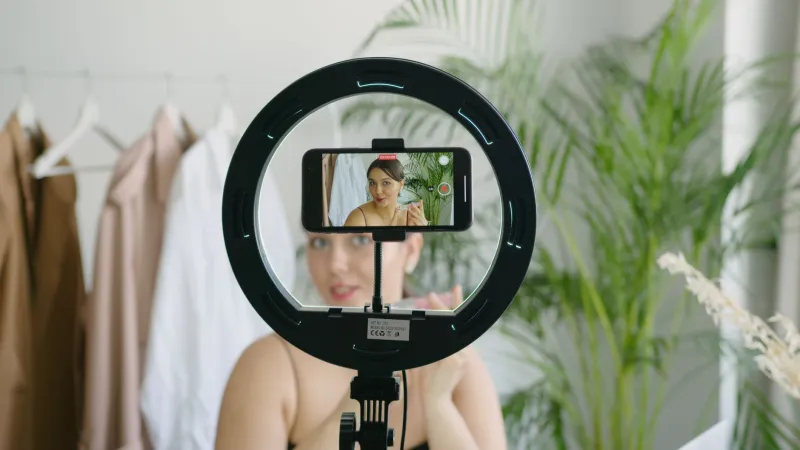
The Correction That Became a Commodity
Somewhere around 2013, a particular kind of exhaustion set in. Americans, saturated by the polished surfaces of broadcast media and the carefully managed personas of celebrity culture, began demanding something that felt more honest. The word that emerged to describe this demand was authentic — and for a brief moment, it carried genuine weight.
The premise was simple: people wanted to see the unscripted version. The messy kitchen, the tearful confession, the admission of failure. Early adopters of this mode — bloggers, YouTubers, and independent podcasters — built substantial audiences by simply refusing the conventions of professional presentation. Their rougher edges were the point.
What the decade revealed, however, was that the moment a behavior generates reward, it ceases to be spontaneous. By the mid-2010s, the aesthetic of authenticity had become as studied and reproducible as any other media format. The slightly imperfect lighting was deliberate. The hesitation before the vulnerable disclosure had been rehearsed. The absence of a filter had, in many cases, required three additional takes.
The Rise of the Authenticity Consultant
Perhaps no single development more precisely captured the paradox than the emergence of professionals paid to make clients appear genuine. Branding strategists, executive coaches, and social media consultants began offering services explicitly framed around authenticity — helping corporations and public figures identify which personal qualities to foreground, which private struggles to selectively disclose, and which informal registers of speech would resonate most effectively with target audiences.
This was not a fringe industry. By the late 2010s, major public relations firms had incorporated what they variously termed "authentic narrative development" or "voice alignment" into their standard service menus. The irony was rarely acknowledged directly. Paying someone to help you appear unpaid-for was simply accepted as a feature of the contemporary communications landscape.
Corporate America followed suit. Brands that had spent decades projecting aspiration pivoted toward vulnerability. Companies began acknowledging supply chain failures in the same casual tone their spokespeople used to discuss weekend plans. The admission of imperfection became a trust-building instrument — and once it became an instrument, it became a technique.
Authenticity as Status Signal
The cultural function of authenticity claims shifted considerably over the decade. Initially, declaring oneself "real" or "unfiltered" was a challenge to established power — a way of marking distance from institutional gloss. By the early 2020s, however, the same declaration had inverted its social meaning. Claiming authenticity had become a status signal available only to those with sufficient cultural capital to perform it credibly.
This was not accidental. The aesthetics of authenticity — the casual wardrobe, the undecorated background, the willingness to discuss personal struggle — required a specific kind of security to deploy. Those who could afford to appear unstudied were typically those who had already secured their position. The founder who takes meetings in a worn t-shirt is not making a sacrifice; he is demonstrating that he no longer needs to make an impression.
For working Americans without that cushion, the authenticity economy presented a different calculus. The demand for genuine self-expression in professional settings — particularly in fields like marketing, media, and technology — placed a quiet tax on those whose authentic selves did not conform to the dominant templates. Performing the right kind of realness became an additional labor requirement, one that was neither named nor compensated.
The Paradox Matures
By the close of the decade, the contradiction at the center of the authenticity economy had become broadly legible, if not broadly resolved. Audiences had grown sophisticated enough to recognize manufactured vulnerability while remaining susceptible to it. The knowledge that a persona was constructed did not necessarily diminish its appeal — in some cases, it enhanced it. The performance of authenticity had become so refined that sincerity and its simulation had grown genuinely difficult to distinguish.
What the decade ultimately produced was not a more honest public culture but a more elaborate one. The tools for projecting realness had multiplied, the professionals trained to deploy them had proliferated, and the audiences consuming the results had become simultaneously more skeptical and more invested. The demand for authenticity had not been satisfied; it had been industrialized.
The transition from 2013 onward did not corrupt some prior state of genuine self-expression. American public life had always involved performance. What changed was the vocabulary available to describe what was happening — and the scale at which the paradox could be monetized. Being real, it turned out, was a product like any other. The decade simply figured out how to optimize the supply chain.