Nothing Left to Hide: How the Decade Made Privacy Feel Like a Confession
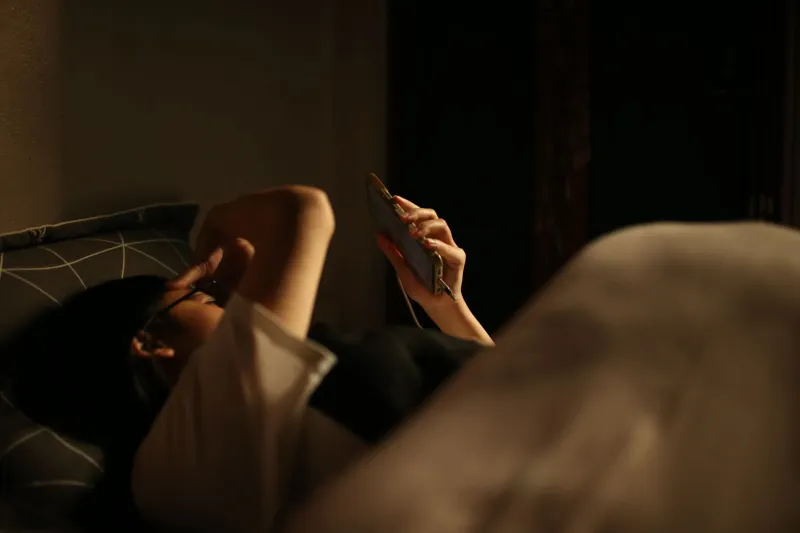
There is a particular discomfort that has settled over American social life in the past decade—one that is difficult to name precisely because it masquerades as virtue. It is the discomfort of the person who, when asked how they are doing, hesitates before answering, uncertain whether a measured response constitutes deception. It is the anxiety of the individual who, scrolling through a feed populated by candid disclosures and confessional threads, wonders what their own reticence signals to those watching. It is, in short, the discomfort of having an interior life in an era that has grown suspicious of interiority itself.
The shift did not arrive without precedent. But the years following 2013 accelerated something that had been building slowly: a cultural equation between transparency and trustworthiness so thoroughgoing that its logical inverse—privacy as suspicion—became almost impossible to challenge without appearing defensive.
The Architecture of Exposure
To understand how secrecy became morally charged, it helps to trace the infrastructure that made exposure feel natural, even obligatory. The platforms that consolidated their dominance after 2013—Instagram, Snapchat, Twitter in its most febrile years, and eventually TikTok—were not neutral conduits for human expression. They were architectures optimized for disclosure. Their reward systems, built on engagement metrics, consistently favored the personal over the professional, the raw over the polished, the revealed over the withheld.
A user who posted a curated image of a meal received a certain response. A user who posted a tearful video about a mental health crisis, a financial collapse, or the end of a relationship received something categorically different: volume, velocity, and the particular warmth of collective witnessing. The lesson embedded in that feedback loop was not subtle. Openness was rewarded. Reserve was not penalized exactly, but it produced a kind of social silence that, over time, began to feel like absence.
This was not merely a consumer behavior pattern. It was a value system being transmitted at scale, and it carried implications well beyond what any individual platform intended.
When Honesty Became a Surveillance Practice
The decade's most consequential conflation was the one it drew between authenticity and total disclosure. In the popular understanding that emerged across social media, podcasts, and the broader wellness content ecosystem, being authentic came to mean being legible—fully, continuously, and preferably in real time. The person who shared their therapy notes, their credit card debt, their relationship conflicts, their family estrangements, was positioned as brave. The person who declined to do so was positioned, however gently, as someone with something to protect.
This framing had roots in legitimate cultural correctives. The decades preceding 2013 had produced real damage through enforced silence: around addiction, mental illness, sexual violence, and systemic inequity. The push to speak openly about these subjects was not misguided. What changed, gradually and then decisively, was the scope of what openness was expected to cover.
By the middle of the decade, the demand for transparency had migrated from the structural to the personal, from the political to the psychological, from the institutional to the individual. It was no longer sufficient to oppose secrecy in public life. One was now expected to demonstrate, through continuous self-disclosure, that one had nothing concealed in private life either. The person who maintained boundaries around their inner world was not simply private. They were, in the decade's emerging moral vocabulary, sus.
The Paradox the Decade Could Not Resolve
What makes this cultural development particularly worth examining is the paradox it generated. The more aggressively the culture demanded transparency, the less genuine transparency it actually produced. When disclosure becomes a social performance—when people share not because they feel moved to but because they understand that not sharing carries a cost—the content of what is shared becomes strategic rather than sincere.
This is a dynamic that researchers studying self-disclosure have long documented: the conditions that produce the most sharing are often the conditions least conducive to authentic expression. When vulnerability is incentivized, it is also, inevitably, managed. The confessional post, the candid story, the brave admission—all of these are curated artifacts, shaped by an awareness of audience, even when they purport to be unguarded.
The decade produced, in other words, an enormous volume of performed openness and a corresponding deficit of genuine intimacy. The feed filled with disclosures. The actual experience of being known by another person—slowly, imperfectly, in conditions that did not require documentation—became harder to locate and, for many Americans, harder to trust.
The Private Self as Suspect
Perhaps the most consequential legacy of this period is what it did to Americans' relationship with their own interiority. Psychologists and therapists working through the latter half of this decade have noted, with some frequency, a new variety of presenting anxiety: the discomfort people feel not about specific secrets, but about the act of having any private thoughts at all. Patients who describe feeling guilty for not sharing more. Individuals who interpret their own desire for solitude as evidence of something wrong with them. People who have so thoroughly absorbed the decade's equation of privacy with dishonesty that they have begun auditing themselves.
This is a significant development, and not only clinically. A culture that pathologizes interiority is a culture that has confused the symptom for the disease. Secrecy, in the decade's dominant framing, became a red flag—something that preceded exposure, scandal, or accountability. To keep something private was to be pre-canceled, pre-exposed, pre-condemned. The rational response, for many people, was to get ahead of it: to disclose preemptively, comprehensively, and often.
What this preemptive disclosure could not accomplish, however, was the thing it was ostensibly designed to produce: relief. Because the anxiety was not really about being discovered. It was about having internalized a standard of self-transparency that no human being can actually meet.
What the Decade Left Unexamined
The cultural conversation that reshaped American attitudes toward privacy between 2013 and the present was, in many respects, a necessary one. Accountability, honesty, and the dismantling of harmful silences are not trivial goods. The decade produced real progress in areas where concealment had long served power rather than people.
But the conversation also left something important unexamined: the distinction between transparency as a civic value and transparency as a personal obligation. Between holding institutions accountable and holding individuals perpetually on display. Between the courage to speak and the compulsion to perform.
Those distinctions matter, and the decade's failure to maintain them has left a particular kind of damage. Americans who came of age during this period inherited not just new tools for communication, but a new moral framework in which the private self is, by default, under suspicion. In which keeping something—anything—to oneself requires justification. In which the simplest form of human dignity, the right to remain unread, has begun to feel like a luxury that must be earned.
That is not transparency. It is something closer to its opposite: a culture so saturated with performed disclosure that genuine honesty has become nearly impossible to locate, and genuine privacy has become nearly impossible to defend.