Prove It: The Decade Americans Turned Skepticism Into a Social Skill
There was a time, not so long ago, when someone at a dinner party could claim to have attended a protest, survived a harrowing medical ordeal, or personally witnessed a historical event, and the table would simply nod. Credulity was, in its way, a social courtesy. To interrogate a friend's anecdote was to commit a small act of rudeness. Then, somewhere between 2013 and the early 2020s, that courtesy expired.
What replaced it was something more complicated—and, for better or worse, more consequential. Americans did not merely become more skeptical. They became systematically so, applying the logic of the fact-check to conversations that had never previously required one. The dinner table acquired the atmosphere of a deposition.
The Infrastructure of Doubt
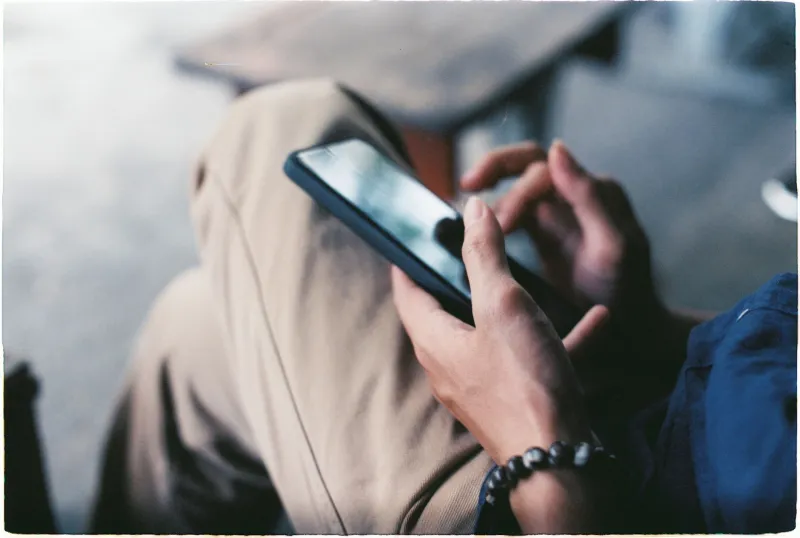
The conditions for this transformation were largely technological. The proliferation of smartphones after 2013 placed a research terminal in every pocket, and social media platforms—initially celebrated as spaces for connection—rapidly revealed themselves as efficient engines of misinformation. By 2016, the phrase "fake news" had migrated from media criticism into everyday vernacular, eventually becoming so overused as to lose almost all descriptive precision. What it left behind, however, was a residue of generalized suspicion.
Deepfake technology, which matured into public consciousness around 2017 and 2018, accelerated the epistemological anxiety considerably. If video footage itself could be fabricated convincingly, the implicit hierarchy of evidence—in which seeing constituted believing—collapsed. Americans who had grown up treating photographic documentation as the gold standard of proof were now being asked to distrust their own eyes. The psychological toll of that adjustment has never been fully reckoned with.
Platforms like Reddit developed entire communities—r/ThatsInsane, r/quityourbullshit, among others—dedicated explicitly to the public debunking of exaggerated or fabricated personal claims. The act of catching someone in an embellishment, once considered petty, was reframed as a public service. Screenshots of contradictory statements circulated as social currency. The exposure of a lie, however trivial, generated engagement that the original claim rarely matched.
Credentials Under Examination
Professional networking felt the shift acutely. LinkedIn, which had operated for years on a largely honor-based system of self-reported credentials, became a site of quiet but persistent scrutiny. Background-check services marketed themselves to small businesses and individual users alike. Stories of fabricated degrees and inflated job titles—always present in professional life—became more visible, more frequently shared, and more likely to end careers publicly rather than quietly.
The wellness and influencer economy, which had exploded after 2013, proved particularly vulnerable to this new auditing culture. Health coaches who claimed clinical credentials they did not possess, motivational speakers who had constructed origin stories from whole cloth, and social media personalities who had manufactured follower counts through purchased engagement all found themselves subject to investigative takedowns produced not by journalists but by ordinary users with time, curiosity, and access to public records.
The irony was not lost on observers: the same platforms that had enabled the original fabrications were now hosting their demolition. Exposure had become its own content genre.
The Intimacy Problem
What is perhaps most striking about this decade-long shift is how thoroughly it colonized intimate life. Romantic relationships, long understood as spaces where vulnerability required a baseline of trust, were increasingly entered with the tools of opposition research. Dating app culture, which normalized the practice of reverse-image searching a potential partner before a first date, helped normalize a broader posture of pre-emptive verification. By the time two people sat across from each other at a restaurant, one or both had likely already consulted public records, mutual connections, and archived social media posts.
Friendships were not immune. The emergence of viral stories about individuals who had fabricated terminal illnesses, refugee experiences, or racial identities—cases that received enormous media coverage throughout the mid-2010s—introduced a new anxiety into social circles. If strangers could construct elaborate false identities, what of the people one actually knew? The question, once it had been asked, proved difficult to unask.
Therapists and sociologists began documenting what some described as a crisis of ambient suspicion—a low-grade but persistent reluctance to extend the benefit of the doubt that had quietly become the default register of American social interaction. Trust, they noted, had always required a degree of risk. What changed was the cultural consensus around whether that risk was acceptable.
Skepticism as Status
Perhaps the most telling development of this period was the degree to which skepticism itself became aspirational. To be credulous was to be naive, and naivety—once a forgivable quality, even an endearing one—became a marker of insufficient engagement with the world. The person who had not yet heard about the latest misinformation campaign, who still shared news articles without checking the source, who accepted a colleague's résumé at face value, was understood to be operating with an outdated social operating system.
Conversely, the ability to identify a manipulated image, trace a viral claim to its origin, or recall a public figure's contradictory statements from three years prior conferred a particular kind of intellectual prestige. Fact-checking became a performance as much as a practice. Corrections issued publicly—especially on social media—carried the implicit message that the corrector was paying closer attention than the corrected.
This dynamic produced its own distortions. The compulsion to verify, unchecked, could shade into paranoia. Contrarianism could masquerade as critical thinking. And the social rewards attached to catching others in error created incentives to look for errors whether or not they existed.
What Was Lost in the Audit
The decade's turn toward systematic skepticism was not without legitimate cause. Misinformation caused genuine harm. Fabricated credentials enabled fraud. Manufactured identities exploited real communities. The instinct to verify, in these contexts, was rational and sometimes necessary.
But something else was lost in the transaction—something harder to name and easier to dismiss. The willingness to extend provisional trust, to accept another person's account of their own experience without demanding corroboration, is not merely a social nicety. It is one of the mechanisms by which people feel known. When that willingness contracts, the quality of human connection contracts with it.
By the early 2020s, Americans had become extraordinarily skilled at identifying what was false. The decade had been, in many respects, an extended education in deception—its forms, its frequency, its reach. What remained less clear was whether all that hard-won skepticism had made the country more honest, or simply more exhausted.
The audit, it turned out, never really ends. It just becomes the background noise of every conversation, every relationship, every claim made in the presence of another person who has learned, as everyone eventually learned, to keep their phone within reach.