Mourning in Public: How a Decade of Social Media Transformed American Grief Into a Shared Performance
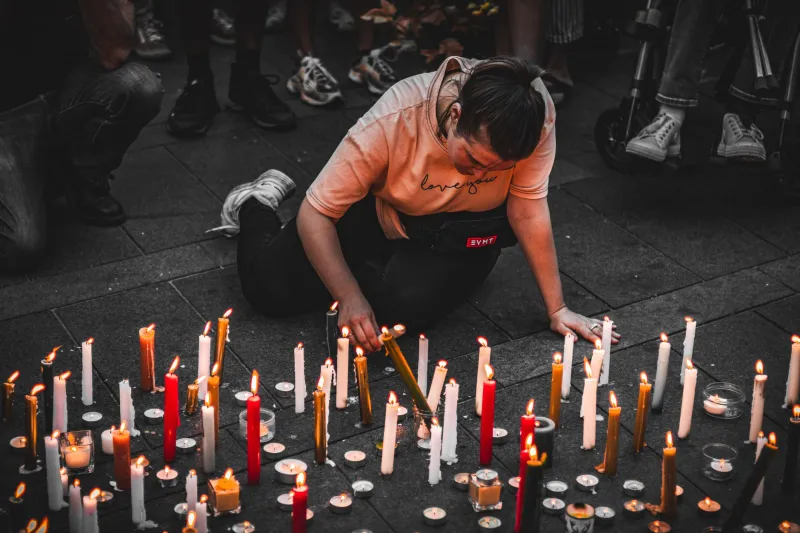
When death arrived in the social media era, it did not remain private for long. Over the course of the decade following 2013, platforms quietly reshaped the rituals of American mourning, turning the most intimate human experience into something measurable by engagement metrics. What emerged was a new and contested form of public bereavement — sincere in its origins, but complicated in its execution.
From the Funeral Home to the Feed
For most of American history, grief was a largely domestic affair. Obituaries ran in local newspapers. Flowers arrived at front doors. The bereaved retreated, and the community followed at a respectful distance. This architecture of mourning had remained largely intact for generations — until the smartphone and the social platform dismantled it almost entirely.
By the mid-2010s, the death of a public figure — a musician, an athlete, a politician — triggered immediate, massive outpourings across Facebook, Twitter, and Instagram. The death of Prince in April 2016, followed by David Bowie earlier that same year, demonstrated just how thoroughly the nation's grieving apparatus had migrated online. Timelines flooded within minutes. Profile photos changed. Candles appeared in squares and outside concert venues, but photographs of those candles appeared on feeds within seconds of the wax being lit.
For ordinary Americans, the shift was equally profound, if less visible. When a friend, a neighbor, or a family member died, Facebook became the primary site of communal acknowledgment. Condolences that once arrived by telephone or handwritten card now materialized as comments beneath memorial posts. The wall of a deceased person's profile became, in effect, a digital headstone — one that accepted ongoing messages, photos, and remembrances indefinitely.
The Architecture of the Tribute Post
What the decade produced, almost without deliberate design, was a recognizable grammar of online mourning. The tribute post acquired a conventional structure: a photograph of the deceased, a brief narrative of the relationship, an expression of disbelief at the loss, and a closing sentiment directed either at the deceased or at a watching universe. Hashtags emerged to organize collective grief around specific deaths. "Rest in Power" entered common usage as a phrase denoting not merely personal loss but political mourning.
Platforms, for their part, developed infrastructure to accommodate this behavior. Facebook introduced its Memorialization feature, allowing accounts to be converted into permanent commemorative spaces overseen by designated legacy contacts. The company also introduced a "Tribute" section, separating ongoing posts from the deceased's original content. These were, by any measure, thoughtful interventions. They were also, unmistakably, product decisions — choices made by engineers and designers about how grief should flow through a system built primarily to sustain engagement.
The tension embedded in that arrangement never fully resolved itself. Platforms that profit from attention had, perhaps inevitably, become the primary infrastructure of American mourning. The incentive structures that rewarded provocative content and maximized interaction did not disappear simply because the subject matter was death.
The Pressure to Perform
For many Americans, posting about loss became not merely an option but an implicit social obligation. Silence — the failure to publicly acknowledge the death of a celebrity one had admired, or the passing of a friend visible in one's network — began to carry its own social weight. Not posting could be read as indifference. Posting too briefly could suggest insufficient feeling. Posting too elaborately risked accusations of performative grief, of leveraging another person's death for personal visibility.
This calculus placed mourners in an uncomfortable position that had no real precedent in prior American social life. Grief had always carried social dimensions — the wearing of black, the observance of mourning periods, the etiquette of condolence — but those conventions operated at a distance from the raw experience of loss. Social media collapsed that distance entirely. The bereaved were now expected to compose themselves, select a photograph, draft language, and publish — often within hours of learning that someone they loved had died.
Grief counselors and therapists began documenting a new set of anxieties among their clients: worry about whether a tribute post was sufficiently eloquent, distress at receiving fewer responses than expected, guilt about the relief felt when a post performed well. The metrics of mourning had arrived, and they were legible to everyone.
Collective Loss and Its Complications
Not all of what social media produced in the domain of grief was corrosive. There is genuine evidence that communal online mourning provided real comfort to isolated individuals — those who had lost someone but lacked a proximate community to mourn alongside them. For people grieving at a geographic remove from family, or navigating losses that carried social stigma, the relative anonymity and accessibility of online platforms offered something meaningful.
The public mourning that followed mass tragedies — the shootings at Sandy Hook in 2012, Orlando in 2016, Las Vegas in 2017, Uvalde in 2022 — demonstrated that digital grief could aggregate into genuine collective expression. The volume and intensity of online mourning in the wake of these events reflected authentic national anguish, even as critics noted that the cycle of outpouring and forgetting had itself become ritualized, a performance of national feeling that substituted for sustained political response.
This was perhaps the decade's most uncomfortable insight: that sincerity and performance are not opposites, and that a grief expressed publicly can be simultaneously genuine and shaped by the expectations of an audience. Americans did not become hypocrites when they began mourning on social media. They became, instead, participants in a new kind of public ritual — one whose conventions were being written in real time, without the benefit of centuries of cultural refinement.
What the Decade Left Behind
By the early 2020s, the norms of digital mourning had stabilized enough to feel, to younger Americans in particular, entirely natural. The notion that death might pass without public acknowledgment on social media had become, for many, nearly inconceivable. The platforms had not merely accommodated grief; they had become its primary venue.
What was lost in this transition is harder to name precisely. Perhaps it was the particular quality of private grief — the kind that does not require an audience, that does not seek validation, that exists entirely outside the economy of attention. Perhaps it was the space that silence once provided, the pause between loss and expression in which something essential about mourning could occur without witness.
Or perhaps what changed was simply the terms on which Americans were permitted to mourn — terms now set, at least in part, by the companies that built the infrastructure through which loss must travel. That the decade normalized this arrangement without much public deliberation is, in retrospect, among the more consequential transitions it produced.