Sincerity for Sale: How 'Keeping It Real' Became the Decade's Most Lucrative Performance
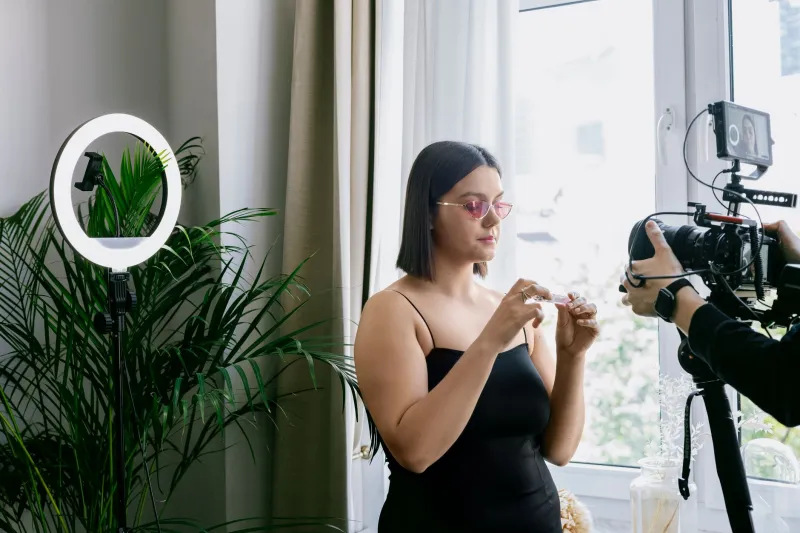
Somewhere around 2013, Americans collectively decided they were tired of being sold a fantasy. The gleaming, aspirational imagery that had defined advertising and celebrity culture for decades felt hollow in the age of the smartphone camera and the comment section. People wanted something real — unfiltered, unscripted, and unashamed. What they got instead was a masterclass in the industrialization of sincerity.
The decade that followed did not eliminate performance. It simply rebranded it.
The Revolt That Became a Revenue Stream
The early signs were unmistakable. Brands that had spent generations cultivating an aura of untouchable perfection began hiring social media managers instructed to sound like a friend texting from the couch. Celebrities who had previously been managed within an inch of their public image started posting unedited photographs, tearful confessions, and candid glimpses of domestic life. The message was consistent: I am just like you.
This was not, on its face, an unreasonable desire. Trust in institutions — government, media, corporate America — had been eroding for years, and the 2008 financial crisis had accelerated a broad skepticism toward any entity that appeared too composed, too polished, or too certain of itself. Authenticity filled that vacuum. It promised a return to something human amid the noise.
The problem was that authenticity, once identified as valuable, became subject to the same market forces as everything else. By 2014 and 2015, the influencer economy had codified what had begun as a genuine cultural impulse into a set of reproducible techniques. The candid bathroom mirror shot. The confessional caption. The strategic absence of makeup. Each of these gestures carried the grammar of spontaneity while being executed with the precision of a media campaign.
The Labor of Looking Effortless
Few transitions of the decade were as quietly exhausting as the shift from curated perfection to performed imperfection. Earlier digital culture had at least been honest about its aspirational nature: you knew the Instagram grid was a highlight reel, even if you felt diminished by it. The authenticity era introduced a more insidious demand — not merely that you present your best self, but that you present your truest self, and that it be compelling.
This created an entirely new category of invisible labor. Influencers and content creators who built audiences on the premise of unvarnished honesty were, in fact, performing extraordinarily complex editorial functions: deciding which vulnerabilities to share and which to protect, timing emotional disclosures for maximum engagement, and calibrating the precise ratio of struggle to triumph that would keep an audience invested without alienating sponsors.
Marketing researchers had a term for the sweet spot: relatable aspiration. The content creator had to appear accessible enough that followers felt a genuine connection, while maintaining enough of an elevated lifestyle that the aspirational dimension — and thus the commercial potential — remained intact. Threading that needle was a skill. It was also, by any reasonable definition, a performance.
Corporate America Learns to Blush
The authenticity imperative did not confine itself to individual creators. American corporations, long accustomed to speaking in the smooth, liability-conscious language of press releases, underwent their own forced transformation. The decade saw the rise of brand voice strategies explicitly designed to sound unstrategic — companies tweeting with apparent spontaneity, CEOs posting LinkedIn reflections about personal failure, and marketing campaigns built around the aesthetic of a handwritten note.
Wendy's became famous for its combative Twitter presence. Brands across industries rushed to hire writers who could replicate that tone, producing what amounted to a factory of simulated irreverence. When a corporation told you it was being real with you, it had almost certainly run that realness through three rounds of legal review.
The more sophisticated players understood that authenticity, in the corporate context, was not a value to be embodied but a perception to be engineered. Patagonia's environmental commitments, whatever their genuine merit, were also among the most effective branding strategies of the decade. Everlane built an entire company identity around the concept of radical price transparency — a transparency that, critics eventually noted, was itself carefully curated.
Vulnerability as Currency
Perhaps the most consequential development of the authenticity economy was the monetization of personal struggle. Mental health disclosures, accounts of trauma, and confessions of insecurity migrated from private conversations into public content — and, in doing so, became subject to the attention economy's brutal incentive structures.
This was not uniformly cynical. Many creators who shared their experiences with anxiety, grief, or failure were doing so in genuine good faith, and many of their audiences found real comfort in that recognition. The transition, however, introduced a perverse pressure: the more effectively a piece of vulnerable content performed — in likes, shares, and follower growth — the more it normalized the idea that personal pain was a resource to be deployed.
By the latter half of the decade, the template was established enough that aspiring influencers were receiving explicit advice on how to structure their origin stories, which struggles were most marketable, and how to deliver a breakdown in a way that preserved brand partnerships. Vulnerability had not been eliminated from the equation; it had simply been rationalized.
The Authenticity Arms Race
As with most cultural commodities, saturation eventually produced skepticism. By the late 2010s, a significant portion of the American public had developed a sophisticated, if informal, ability to detect performed authenticity — what might be called a sincerity detector calibrated by years of exposure to its counterfeits. The response, predictably, was an escalation.
Creators who had built audiences on one level of apparent openness found themselves compelled to go further: more intimate disclosures, more unguarded moments, more evidence that the version of themselves on screen was indistinguishable from the version that existed off it. The finish line kept moving. Authenticity, by its nature, cannot be fully achieved through effort — but that did not stop an entire industry from trying.
The paradox at the heart of the decade's self-presentation culture was this: the more systematically Americans pursued the appearance of genuineness, the more they required a strategy to do so. The tools of authenticity — the unposed photo, the tearful admission, the deliberately imperfect caption — accumulated their own conventions, their own aesthetics, and eventually their own exhaustion.
What the Decade Left Behind
The authenticity industrial complex did not destroy sincerity. Genuine moments of human connection continued to occur on the platforms designed to commodify them, and many of the creators who built careers on personal disclosure were telling the truth, at least about some of it. What the decade altered was the interpretive environment in which those moments were received.
Americans who came of age in the 2010s inherited a cultural landscape in which the performance of authenticity was so prevalent that authenticity itself became difficult to identify. Trust, already under pressure from a decade of institutional failure, was further complicated by the knowledge that every apparent act of openness might be a calculated one.
The decade did not make Americans more fake. It made them more aware — sometimes paralyzingly so — of the performance embedded in every act of self-presentation, including the ones they most wanted to believe were exempt from it.