The Price of Looking Effortless: How 'No Filter' Became the Decade's Most Expensive Lie
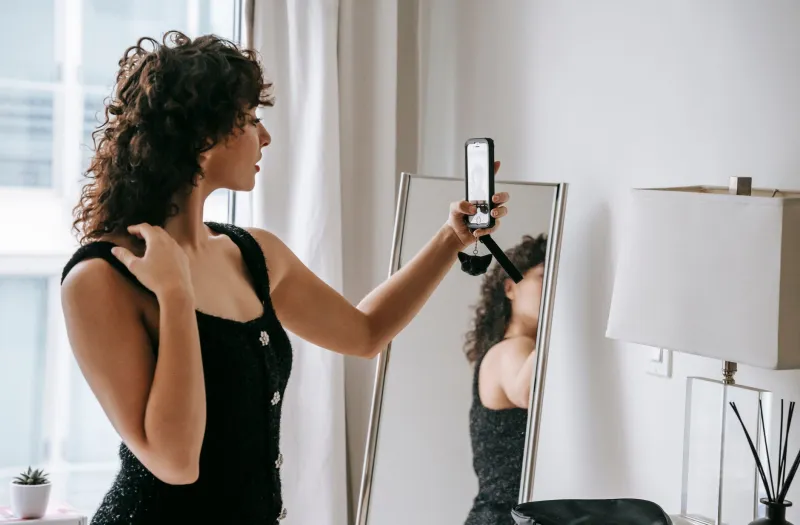
When Instagram users began captioning photographs with '#nofilter' around 2013, they inaugurated what appeared to be a democratic rejection of artifice. What followed instead was the construction of an elaborate new hierarchy — one in which the performance of effortlessness became more costly, and more carefully managed, than any polished veneer it replaced.
The decade between 2013 and the early 2020s was, by nearly every cultural measure, obsessed with authenticity. Brands hired consultants to sound more human. Celebrities abandoned publicist-approved statements in favor of tearful Instagram confessions. Influencers built audiences of millions by promising, above all else, that they would never pretend. The market rewarded rawness. Platforms amplified it. And somewhere in the machinery of that reward system, a quiet inversion occurred: the most convincing displays of authenticity became the most expensively produced.
The Aesthetic That Required an Entourage
Consider what it actually took to appear unfiltered during this period. A celebrity photographed in a candid moment — no makeup, hair loosely gathered, wearing what appeared to be a simple cotton t-shirt — was, in most documented cases, the product of considerable invisible labor. Colorists who specialize in making hair look naturally sun-kissed. Dermatologists whose treatments allow skin to photograph well without foundation. Wardrobe consultants who source garments that read as casual but retail above three hundred dollars. Lighting technicians, even on supposedly spontaneous shoots, who understand how to make a flash look like afternoon sunlight through a kitchen window.
This was not hypocrisy, exactly. It was the logical conclusion of a culture that had elevated naturalness to an aesthetic ideal while simultaneously developing the tools to manufacture it at scale. The labor became invisible precisely because its goal was invisibility.
For those without access to such infrastructure, the demand for authenticity presented a different kind of problem entirely.
Performing Realness on a Budget
For the vast majority of Americans who participated in social media culture during this decade, authenticity was not a managed production — it was an exhausting daily obligation. The pressure to document one's life in real time, to confess publicly, to share struggles before they had been processed, to maintain a persona that felt simultaneously spontaneous and coherent, fell heaviest on those with the fewest resources to manage it.
Researchers studying social media behavior noted a consistent pattern: users from working-class and lower-income backgrounds were more likely to share unmediated, emotionally raw content, while users with higher incomes and education levels were more likely to share content that appeared raw but had been carefully considered. The first group was often praised for bravery. The second was praised for relatability. The distinction between those two forms of praise contains an entire sociology.
Therapists, life coaches, personal branding consultants, and media trainers — professions that expanded dramatically over this decade — provided their clients with the vocabulary and strategic distance necessary to share personal material in ways that felt genuine without being genuinely unguarded. This was a service. It had a price. And that price placed it beyond the reach of most people who were, in the meantime, being told that unfiltered honesty was the highest virtue.
The Curation Paradox
What made the authenticity economy of this period particularly disorienting was its recursive quality. The more widely audiences came to understand that 'realness' could be manufactured, the more sophisticated the manufacturing had to become. By the mid-2010s, a simple confessional post was no longer sufficient evidence of authenticity — it could too easily be read as calculated. What was required instead was a kind of meta-authenticity: the appearance of someone who was aware of performance culture and had chosen, consciously, to transcend it.
This was a considerably more complex performance to sustain, and it demanded a higher level of cultural capital to execute convincingly. It required knowing which vulnerabilities read as relatable versus which read as unstable. It required understanding platform-specific conventions well enough to violate them in ways that felt deliberate rather than naive. It required, in short, a degree of media literacy and emotional management that correlates strongly with class and educational background.
The result was a paradox that defined much of the decade's digital culture: the people who most successfully projected authenticity were frequently those who had thought most carefully about how authenticity is projected. And the people who were most genuinely unguarded were often the least legible within the aesthetic frameworks that authenticity culture had established.
When Brands Learned the Language
Corporate America was not slow to recognize the commercial value of this shift. By 2015, major consumer brands had largely abandoned the polished aspirational advertising that had defined the previous generation of marketing and replaced it with content that mimicked the texture of personal social media posts — slightly imperfect photography, conversational copy, strategic glimpses behind the scenes. Companies hired 'brand voice' specialists to make their communications sound less corporate. Fast food chains tweeted like bored millennials. Airlines apologized with apparent sincerity.
What this corporate adoption revealed, more clearly than almost anything else, was the degree to which authenticity had become a style rather than a condition. If a multinational corporation could learn to perform it, it was not a quality that inhered in persons or communities — it was a set of conventions that could be studied, replicated, and deployed. The '#nofilter' aesthetic had become its own filter, perhaps the most technically demanding one yet devised.
What the Decade Left Behind
The transition that began around 2013 did not simply change how Americans presented themselves online. It restructured the social meaning of visibility itself. To be seen — authentically seen, in the terms the culture had established — required either the resources to manage one's image with professional precision or the willingness to expose oneself without those protections.
Those who could afford the former were celebrated for their courage. Those who practiced the latter were often celebrated briefly, then quietly penalized when the unmanaged nature of their disclosure became apparent — when the rawness that had initially attracted attention turned out to be genuinely uncontrolled rather than artfully approximated.
The decade's most durable legacy in this regard may not be any particular platform or aesthetic trend, but a more fundamental reorganization of what it costs to be known. Authenticity, which presented itself as the great equalizer of digital culture, turned out to reproduce the inequalities it claimed to dissolve — expressing them not in the language of wealth and polish, but in the subtler and more deniable language of ease.